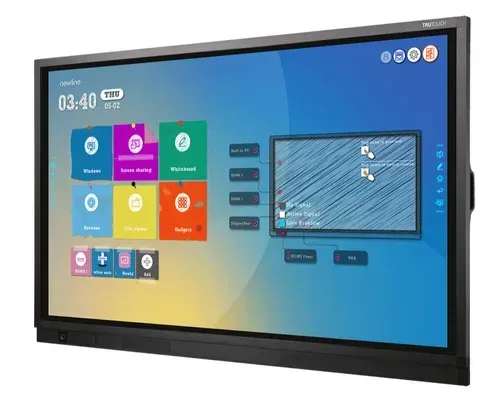
Interactive Flat Panel Lifespan, Warranty & TCO (2026)
An interactive flat panel is rated for 30,000–50,000 hours of backlight life, which at typical school usage of 6-8 hours a day works out to well over a decade of service. The standard warranty in India is 3 years onsite, extendable to 5 years (and with some brands up to 7), and unlike a projector there are no lamps or filters to replace which is why the panel that costs more on day one usually costs less by Year 5.
But "50,000 hours" is a lab rating, not a promise. What actually determines how long your panel lasts and what it costs you along the way is warranty terms, power protection, daily handling and software ageing. Here's the honest total-cost-of-ownership picture we give schools and coaching classes before they buy.
What "lifespan" really means for an IFP
An interactive flat panel has four things that age at different speeds:
The LED backlight the headline number. Rated 30,000 - 50,000 hours depending on the panel. At 8 hours a day, 220 working days a year (~1,760 hours/year), even the lower 30,000-hour rating crosses 15 years. Backlight failure is rarely why a panel gets replaced.
The touch layer and glass. Toughened glass on a quality panel survives years of classroom use; the touch frame (IR sensors on most school panels) can fail zone-by-zone if the frame is damaged or dust-clogged.
The built-in Android system. This is the part that ages fastest not physically, but in software. A panel bought with an old Android version and 4GB RAM starts feeling slow with newer teaching apps in 4-6 years, long before the display dies.
Ports and power board. HDMI/USB ports wear with daily plugging; the power board is the most common repair after voltage events.
The practical takeaway: plan a 7-10 year life for the display itself, and a 5-7 year life for the Android brain inside it. Panels with an OPS slot let you upgrade the computing module later without replacing the display one reason we push schools to check the spec sheet, not just the screen size.
Warranty in India: what's standard, what's worth paying for
Standard cover: 3 years onsite warranty is the market norm for education IFPs in India onsite matters, because a 65-86 inch panel is not something you courier to a service centre. Treat anything less than 3 years onsite as a red flag in a school tender.
Extended cover: most major brands offer paid extensions to 5 years; some (ViewSonic, for example, per their published extended warranty program) go up to 7 on select models. If you expect the panel to serve 7+ years, a 5-year extension bought at purchase is usually cheaper than one post-warranty repair on a large panel.
What warranty covers: panel defects, backlight failure, touch malfunction, board failures under normal use.
What it doesn't: physical damage (cracked glass), voltage-surge damage where no protection was installed, and unauthorised repairs. Broken glass on a large panel is often uneconomical to repair this is the single most expensive avoidable failure.
Questions to ask the vendor before you sign
Onsite or carry-in? Get "onsite" in writing, with a response-time commitment.
Who services it brand or dealer? Brand-backed service networks outlast dealer promises, especially outside metros.
Is the touch frame covered, or only the display? Some warranties treat the touch layer differently.
What voids it? Ask specifically about surge damage and cleaning chemicals.
The real running costs (and the ones you can skip)
Consumables: effectively zero. No lamps, no filters, no calibration visits. This is the structural advantage over projectors, whose lamps fail mid-term and get harder to source as models age we covered the full comparison in our smart classroom setup cost breakdown.
AMC after warranty: ₹3,000–8,000 per panel per year is the typical market band for an IFP maintenance contract. For a school with 10+ panels, negotiating a fleet AMC with your installer is cheaper than per-incident repairs.
Power protection: budget it, don't debate it. A basic UPS/stabiliser (around ₹5,500 per room) protects the component most likely to fail the power board and keeps your warranty argument clean after a surge event. This is the highest-return ₹5,500 in the whole smart classroom.
Electricity: modest. A typical education IFP draws in the low hundreds of watts in use noticeable across 20 rooms, negligible per room and standby draw is minimal if panels are actually switched off after hours.
Five habits that decide whether your panel lasts 5 years or 10
1. Switch off, don't just standby, at day end. Backlight hours are the life currency, an idle glowing panel is spending them for nobody.
2. Clean with a dry or lightly damp microfibre cloth only. Alcohol and ammonia cleaners damage anti-glare coatings and can void warranty. No spraying liquid directly on the panel.
3. Keep the room ventilated. Heat is the silent killer of boards and backlights. Don't box the panel into a tight alcove above a heat source.
4. Use the UPS/stabiliser, always. Most out-of-warranty repairs we see trace back to voltage events in rooms where the stabiliser was "coming next month."
5. Train teachers on the basics. Ten minutes on power-down, ports and cleaning during induction prevents most damage. Untrained handling not component quality is the top cause of early failures we encounter.
Total cost of ownership: how to actually compare quotes
When two quotes land on your desk, compare them on a 5-year basis, not the invoice price:
Year 0 - purchase and install: education IFPs start around ₹85,000 + GST for a 65-inch class panel and rise with size and spec. Include mounting, wiring and the UPS in this line.
Years 1–3 - warranty period: should be near-zero if the warranty is genuinely onsite. Cheap panels with weak service networks generate their real cost here, in downtime and repair trips.
Years 4–5 - AMC or extended warranty: ₹3,000–8,000/year AMC, or a 5-year extended warranty bought upfront.
The hidden line - teaching time lost: a panel that's down for three weeks waiting for a part costs more than its AMC ever would. Service network beats spec sheet in the long run.
A cheaper panel with a thin warranty and no local service is not cheaper, it just moves the cost to Years 2–5 and adds downtime. That's the honest arithmetic behind our advice in the smart classroom equipment checklist: buy the service network, not just the screen.
When to repair, and when to replace
Repair when the fault is a power board, ports or touch frame on a panel under 6–7 years old these are economical fixes, especially under AMC.
Replace when the glass is shattered, when the panel predates HDMI/Android versions your teaching software needs and has no OPS slot, or when repair quotes cross roughly a third of a new panel's price.
Repurpose older-but-working panels into staff rooms, labs or smaller coaching batches when classrooms upgrade, a working display with dated Android still has years of non-interactive display life. (Where classrooms are heading next is covered in our smart classroom overview.)
FAQ
How long does an interactive flat panel last?
The backlight is rated for 30,000–50,000 hours, more than a decade at school usage of 6–8 hours a day. In practice, plan for 7–10 years of display life; the built-in Android system typically feels dated sooner, around Years 5–7, which is why an OPS-upgradeable panel ages better.
What warranty do interactive flat panels come with in India?
Three years onsite is the standard for education panels from reputed brands, with paid extensions to 5 years widely available and up to 7 years from some manufacturers on select models. Insist on "onsite" in writing, large panels can't be sent to a service centre.
Is an AMC necessary after the warranty ends?
For a single panel, per-incident repair can be acceptable. For a school running many panels, an AMC at ₹3,000–8,000 per panel per year is usually cheaper than unplanned repairs and more importantly, comes with response-time commitments that limit teaching downtime.
Do interactive flat panels cost more to maintain than projectors?
No, the opposite. IFPs have no lamps or filters, so consumable cost is effectively zero, while projector lamps are a recurring purchase and a recurring failure point. Over five years, the panel's higher purchase price is typically offset by near-zero running costs.
What voids an IFP warranty most often?
Physical damage to the glass, voltage-surge damage in rooms without a UPS/stabiliser, and cleaning with harsh chemicals. All three are preventable with basic handling training and a small power-protection budget.
Planning panels for your school or coaching class? We'll give you the 5-year cost picture for your exact room count - panel, warranty, AMC and power protection before you commit to anything. AVM Infotech has equipped classrooms across central India since 1998.

