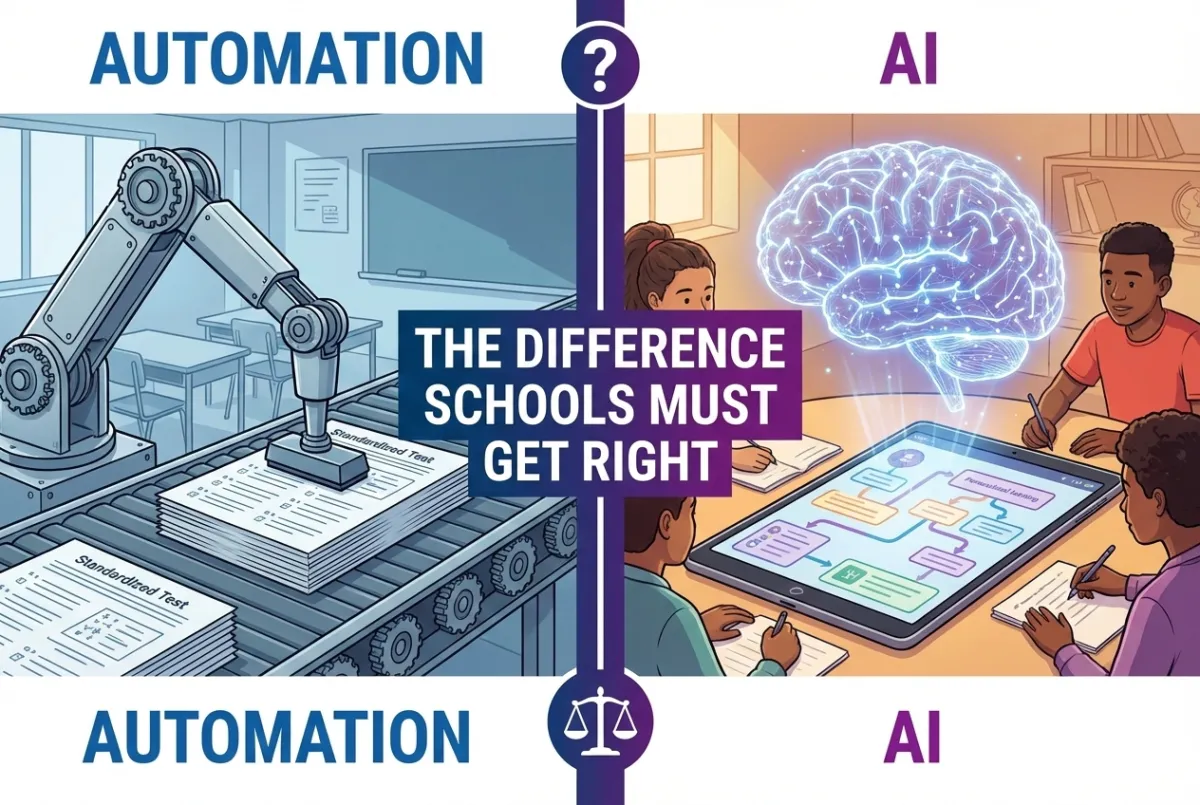
Automation vs AI: The Difference Schools Must Get Right
In today's tech-driven classrooms, distinguishing automation from AI is crucial for effective education, especially as CBSE integrates AI into curricula from Class 3. Edtech leaders like AVM Infotech India Private Limited offer tailored solutions to clarify these concepts, empowering schools with hands-on tools for future-ready learning.
Rule-Based vs Learning-Based Systems
Automation relies on rule-based systems that follow predefined instructions without adaptation. These systems execute repetitive tasks precisely, such as a washing machine's fixed cycles or traffic lights switching on timers. AI, however, uses learning-based systems like machine learning, where algorithms analyze data patterns to improve over time, enabling decisions in unpredictable scenarios.
Everyday Examples Students Know
Students encounter automation daily in apps like spell-checkers that apply fixed grammar rules or calculators performing preset math operations. Contrast this with AI in Netflix recommendations, which learn from viewing habits to suggest shows, or Siri understanding varied voice commands through natural language processing. These familiar tools highlight how automation is rigid while AI adapts dynamically.
Why Teach Automation First
Starting with automation builds foundational logic and programming skills before tackling AI's complexities. Rule-based systems teach cause-and-effect thinking, making concepts like loops and conditionals accessible without overwhelming data science prerequisites. This sequence prevents frustration, as students master predictable outcomes first, paving the way for AI's probabilistic nature.
CBSE's Curriculum Line
CBSE introduces AI from Class 6 via a 15-hour "Skilling for AI Readiness" module, expanding to mandatory curriculum from Class 3 in 2026-27, focusing on ethics, project cycles, Python, NLP, and computer vision. Notably, CBSE emphasizes AI foundations over pure automation, yet lacks explicit rule-based prerequisites, risking gaps in basic computational thinking.
How Misunderstanding Breaks Learning
Confusing automation for AI fosters overreliance on tools like chatbots for rote tasks, eroding critical thinking and problem-solving joy. Students may view all tech as "magic," skipping ethical reasoning or data biases, leading to shallow comprehension and real-world application failures. Clear distinctions ensure balanced tech literacy.
All AI uses automation, but automation alone isn’t AI. Schools bridging this gap prepare students for an intelligent future. Partner with AVM Infotech India for seamless edtech integration that demystifies these technologies today.

